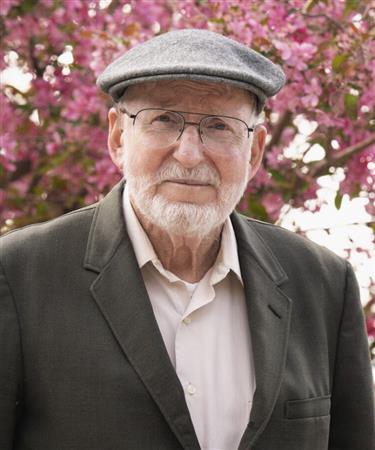
Last week our own esteemed history professor, Henry Weisser, shared The Wit and Wisdom of Winston Churchill.
He was said to be the greatest man of the 20th century. Why? His leadership saved Europe from tyranny. He was the right man in the right place at the right time. He was also a great Parliamentary leader.
He also excelled at other things:
- He was a noted amateur artist
- He was a warrior: He was in five wars, fifteen battles, was under fire at least 60 times.
- He was a historian – responsible for 10 million words in print, including 43 book length works, hundreds of articles.
- He was also an artisan, reconstructed Chartwell, built walls, a brick layer.
- He always lived well. It was estimated he consumed 20k bottles of champagne in his lifetime. He was one of those rare highly functioning alcoholics.
His mother was Jenny Jerome, an American beauty. His father was Lord Randolph Churchill, younger son of the Duke of Marlborough, a politician. Randolph never had a high view of his son Winston. Churchill was an aristocrat with primogeniture on titles. His Early life shows how he so admired his parents, who so neglected him. Winston was poor at school, where classic Latin and Greek texts were studied. He was held back three times at Harrow and wasn not good enough for Eaton. Winston learned to handle English instead! Randolph saw Winston playing with toy soldiers and suggested an army career. He got into Sandhurst, the "English West Point", on his third try. He was a much better student at Sandhurst.
He got a commission in the cavalry as a Subaltern, the equivalent of a Second Lieutenant. He found being under fire exhilarating. Surprisingly, nothing hit him. He wanted to go in the first wave on D-Day. The King had to dissuade him.
Churchill wrote to make money. The family fortune was exhausted, and living well in high society was very expensive.
When Winston was young, the British Empire was at its height. One quarter of the earth’s people were British or under British law. He was always an imperialist. He believed that British laws, customs, religion and way of life were superior. Of course this veered into racism. Racism permeated nineteenth century beliefs, manifesting a sense of superiority to indigenous people.
He was captured in the Boer War and made a daring escape that brought him fame.
Churchill always had his critics who found him arrogant, boastful, brash, presumptuous and self-serving. To them he was a medal and glory hound. David Lloyd George was his mentor in Parliament. Churchill had joined the liberal party by this time. He always believed in Parliamentary institutions and the rule of law. He helped pass the national insurance act of 1911, old age pensions, and lots more. Churchill is one of the founders of the British welfare state. He held many Cabinet posts. Most famously, Churchill became First Lord of the Admiralty, although he had been an army officer.
When World War I broke out, it soon settled into a dismal stalemate across a 200-mile line of opposing trenches: the Western Front. Churchill wanted to get around this by breaking open the Black Sea, taking Turkey out of the war and aiding Russia. This became the famous Gallipoli campaign. It got bogged down and led to a terrible slaughter. Churchill was blamed. What followed were his “Wilderness Years” when nobody wanted him in government. At least he was happily married to Clementine Hoosier. They were monogamous when many aristocrats were not.
Hitler rose while Churchill was out of office, in his wilderness years. But, he understood what Hitler and appeasement were about. He urged rearmament and was called a war monger (Appeasement, Peace in our time). Eventually, people realized that Churchill was right. He became Prime Minister at 65. He said “I felt I was walking with destiny and that all my past life had been preparation for this hour and for this trial.”
Churchill became the great British hero of World War II, holding out in the most desperate years of the war. He held out when Britain stood alone. The Battle of Britain was the first all-air battle. In 1941, Hitler invaded Russia. The attack of Pearl Harbor brought in the United States at the end of 1941. Eventually, the United States gained preponderance in the West.
Churchill was a foe of socialism, which gained force in the British Labour Party. He was astounded when Labour won the 1945 election after V-E day.
Winston Churchill was a famous man, made even more famous by his wit and wisdom.