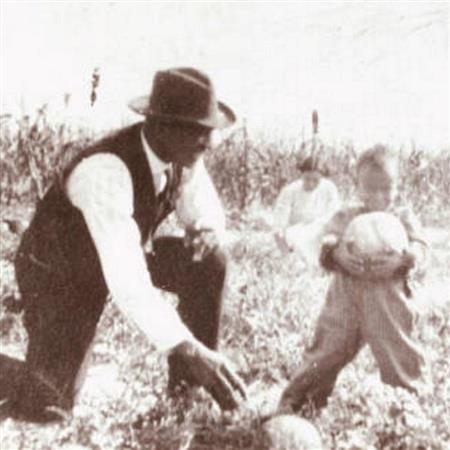
On Wednesday, 12 February 2025, our Club will welcome Erin O’Toole and Dr. George Junne to introduce us to Dearfield, the largest black homesteading settlement in Colorado.
Dearfield, in Weld County, is about 70 miles northeast of Denver was established by Oliver Toussaint Jackson in 1910. Inspired by the white colony at Greeley, Colorado, Jackson formed the Negro Townsite and Land Company. Nineteen settlers trekked to Dearfield in 1911. One of those early settlers was James Monroe Thomas. Some lived in dugouts and burned cow chips for fuel. By 1915, Dearfield settlers had constructed 44 wooden cabins on their homestead claims.
Demand for Dearfield’s agricultural products boomed during World War I, creating growing prosperity. More settlers arrived, boosting its population. At its peak between 1917 to 1921, Dearfield may have housed as many as 300 residents. In 1918, the Dearfield homesteaders harvested their first significant marketable crops, netting them over $50,000. This allowed them to buy new farm equipment, upgrade their stock, and make home improvements. Many homesteaders also worked for white ranchers and in the town of Greeley.
The town began to attract businesses: a company to manufacture concrete blocks, a lumber and coal yard, a boarding house and store, and a hotel. The community’s cultural life grew as well. Two churches provided regular services. O.T. Jackson built the Dearfield Lunchroom, which became a kind of community center where residents gathered. Residents opened a school, and the community hosted an annual festival and carnival. The town attracted prominent speakers including Colorado Governor George Carlson.
But the postwar period was harsh. The relatively wet 1910s gave way to the drier 1920s and then the extreme drought of the 1930s. The prices for their crops collapsed and fewer new settlers arrived. By 1925, Dearfield was home to a tiny fraction of its 1921 level. The Dust Bowl forced most Dearfield homesteaders to seek work in the city. Jackson tried rebranding Dearfield as a “Valley Resort” for African Americans from Denver. He later offered to sell Dearfield to the federal government for use as an internment camp for Japanese-Americans. Both plans failed, and most of the town was torn down, the lumber reused.
A few deserted buildings remain in Dearfield: a gas station, a diner, and the founder's home. In 1995, the town was listed on the National Register of Historic Places. A 2010 monument next to one of the remaining buildings contains information about the history of the site.
Dr George Junne is Professor of Africana Studies at the University of Northern Colorado. He is one of the state’s leading scholars on Dearfield, and an engaging and dynamic speaker with a deep love for the subject. He received his BFA, M.A, and Ph.D. from the University of Michigan. His particular research interests other than Dearfield are African Americans in the Civil War, African Americans in Colorado, Blacks and the Ottoman Empire, Red/Black Indians and Blacks in WW1.
Erin O’Toole began her career at a country radio station in Cincinnati, Ohio and then moved to KVCR in San Bernardino where she became the Morning Edition host and reporter. In 2009 she moved to KUNC in Greeley. Erin is currently host of KUNC’s new program and podcast, “In the NoCo” where she works to bring context and diverse perspectives to the important issues of the day in Northern Colorado. Her work has been recognized by the Associated Press, the Colorado Broadcasters Association, PRNDI, RTNDA, and the Society for Professional Journalists.