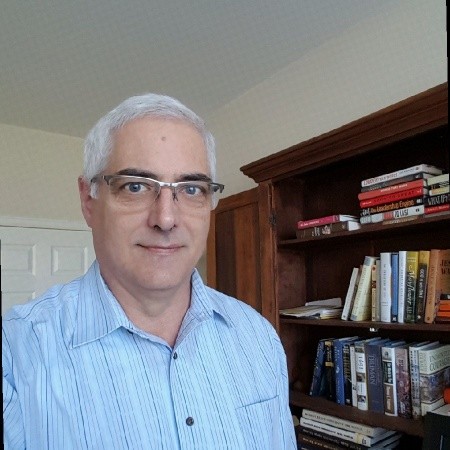
A little about myself
I was born and raised on a farm in southern Indiana. Obtained B.S. and M.S. at Murray State University in southwestern Kentucky and PhD from the University of Tennessee in Plant Breeding and Genetics. Post Doc’ed at the University of Nebraska and then moved to Fort Collins in 1986 to work at CSU on a United States Agency for International Development (USAID) grant entitled ‘Tissue Culture for Crop’. This international project was to use new technologies to develop environmental stress tolerance in several relevant international crops such as rice, sorghum, and millet. As that grant ended in 1989, I was able to get a position with Anheuser-Busch in St. Louis working on rice and later barley. I moved back to Fort Collins in 2007 to manage a global malt barley breeding program. At its height there was staff of 60 in 10 countries and conducting research trials in 17 countries. The program was also able to do experiments on the International Space Station. I was divorced in 2014 and have 2 children, both of whom live in Fort Collins. I retired at the end of January 2020 and now spend a week or so a month in Indiana helping my dad.
Rotarian Statement
I have been in agriculture may entire life, from living and working on a farm, getting degrees in agriculture and plant breeding to working nearly 40 years in agriculture research in the US and Globally. My work in agriculture was driven by a belief that I could help provide food security and improved living conditions by developing crops that gave more consistent crop yields.
As a manager in a large company, providing timely, correct information was essential for the company, employees, and farmers we worked with. Developing the best research data possible is a form of truth without which the research moves in the wrong direction. Presenting data and information truthfully to senior management was essential to get the program going. Working internationally, developing projects and personnel to deliver improved barley varieties were great personal achievements. In our research program it was essential that we developed relationships with people that were going to use our varieties as well as those growing the varieties. Developing that support meant we, as plant breeders, was meeting our customer’s needs with a variety that provide benefit to them. Ultimately communicating those results to senior management and growers around the world was critical for the program to be viewed as successful.
I retired in January 2020 after a long career and now I am interested in becoming more active in the community will volunteer offerings and fellowship. I believe, after visiting a few times, that Rotary can be an organization that will provide me that opportunity.