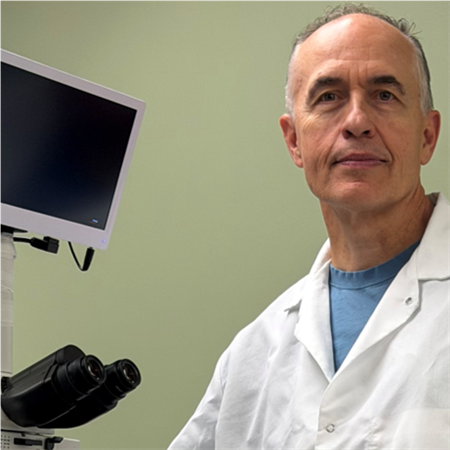
Dr Phillip Purdy, PhD is the Research Leader (Acting) of The National Laboratory for Genetic Resources Preservation in Ft Collins, the world’s largest & most genetically diverse gene bank that supports U.S. agriculture in producing high-quality food, feed, and fiber.
Dr. Phillip Purdy, PhD, joined USDA-ARS in February of 2003 where he has been an Animal Physiologist with the National Animal Germplasm Program (NAGP) at the National Laboratory for Genetic Resources Preservation (NLGRP) since. His mission and research are focused on acquiring and developing assisted reproductive technologies that will enable more efficient and higher quality collection, preservation, and utilization of germplasm (semen, eggs, embryos, DNA, cells, tissues, organs, etc.) from all agricultural species (aquaculture, cattle, goats, insects, pigs, poultry, sheep), and on development of the national repository. His research enables collection of genetically diverse and secure germplasm samples that are included in the U.S. national repository and can be used for such things as repopulation of breeds or lines of livestock, or genetic/genomic research. As a result, the team at NAGP has created the world’s largest, most diverse collection of animal germplasm which currently contains over 67,000 animals and 1.32 million samples. Dr. Purdy’s duties and expertise with NAGP also enable him to serve as an advisor to many private, commercial, federal, and academic institutions that work with ARTs, and with numerous national and international scientists to assist them with institutional or national gene bank development in their own countries. Dr. Purdy recently accepted the Acting Research Leader position and consequently also supervises the plant curation and research unit at NLGRP which has a similar mission.
The National Laboratory for Genetic Resources Preservation’s (NLGRP) mission, as part of the U.S. Department of Agriculture’s Agricultural Research Service, is to support U.S. agriculture in producing high-quality food, feed, and fiber. The plant and animal units within the national laboratory provide food security by acquiring, evaluating, preserving, and distributing critical genetic resources including plant, animal, insect, and microbial germplasm for the agricultural industries (e.g. farmers, ranchers, corporate producers) and the research community (e.g. state, federal, academic laboratories). These actions, in conjunction with research that supports and develops these activities, has resulted in the creation of the world’s largest and most genetically diverse gene bank.