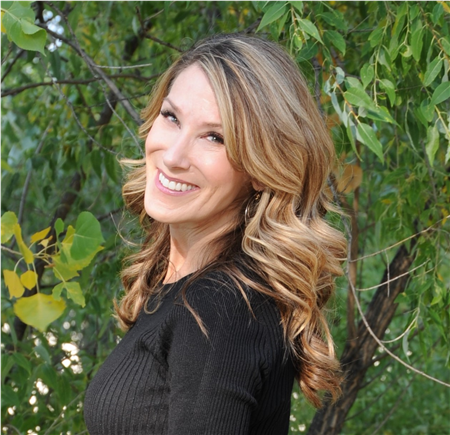
Given this year’s Rotary focus on Mental Health (How are you, Really?), Wednesday's speaker, Stephanie James, a local psychotherapist and transformational coach (and also the daughter of fellow-member Judy Boggs) was right on target. Stephanie addressed the power of these questions. When we ask “how are you?” most often the rote answer “Fine” or “good.” However, when we ask, “How are you really?” the message is conveyed that, “I see you and I care about your wellbeing.”
Conversations about mental health and wellbeing used to be very taboo. With 36 years in the mental health and personal development field, Ms. James has seen a continued opening in that conversation that was heightened during the Covid 19 pandemic. During the pandemic,
there was a 25% increase in depression and anxiety worldwide and this increased the need for mental health services. This helped to reduce the stigma on seeking help and increased the availability of mental health service through telehealth- online access to mental health professions.
Too often in our history we have heard the adage, “Just pull yourself up by your bootstraps.” Which implies, “Toughen up and don’t ask for help.” This has lead to an increase in suicides, which currently is Alaska and South Dakota that have a number one suicide rate per capita in the nation, much do to this sort of “rugged individualism” mentality
Stephanie shared that if we want to see change in our community’s mental health, it starts with each one of us tending to and taking care of our mental health and wellbeing and then we are better able to serve others. Trauma may include some events or effects that would seem to be
minor: getting enough sleep; having tensions in a relationship; being economically stressed; ignoring how we are feeling. The trouble is that if you suppress the trauma and your reaction to it, it will eventually come roaring back. Although it may be treatable by such interventions as
EMDR (Eye Movement Desensitization and Reprocessing) therapy, there are also less sophisticated or intimidating approaches that the individual can practice on his/her own. One of the major problems is that every human being has an inbuilt negative bias that originated in the time before civilization when potential disaster had to be countered immediately (e.g., attack by a sabre-tooth tiger). Although those sorts of threats are now much less common, our reactions to less dramatic traumas are still built in. Your reticular activating system, a part of your brain, guides your behavior and decisions in avoiding threats. Unfortunately, negative experiences stick whereas positive experiences typically slide right out of your head. But capturing and holding onto a positive image requires as little as 18 seconds of focusing on it – you just have to take the time to do it.
So she suggests that you develop mental-health bookends for your day, first thing in the morning and last thing at night, when your head is most amenable to being influenced. First thing in the morning, write down three things for which you are grateful and focus on them for18 seconds. practicing this for as little as 21 to 30 days will produce noticeable changes that will stick. Last thing at night, write down what had happened that day that was positive or the best thing that happened that day. One female CPA did that and showed a significant improvement. A couple told each other what they appreciated about each other and saw an improvement in a week. If you think about traumas from the past or potential traumas in the future, your body reacts chemically as if those events are happening now, so focus on an object in the here and now to bring yourself into the present moment. She suggests that you can create your environment for positive mental health. Eat nutritious food; exercise; get into nature; journal so that you can externalize what is happening in your brain. If you write a letter to someone to express your gratitude to them, and then read it to them, you experience mental health benefits for some three months. Regular meditation involving breathing techniques can have dramatic calming effects. You can do some of these things every day to stop the chatter in your head and bring you back to the present moment. When we take care of our own mental health, we become a conduit for mental health for the community. Your. Mental. Health. Matters.
Questions:
What happens when you attach someone to you in the positive sense and then that individual becomes a source of trauma? She used the hand as an illustration: the palm is the trauma and the fingers are sensory paths to and from that trauma and there are ways (including EMDR) for
re-processing the brain’s response to that trauma.
How much of a problem are cell phones? She referenced the show “Social Dilemma”. The social aspects of cell phone technology are designed to produce dopamine hits. The cure is less time on the phone. Nature without the cell phone is good.
What are the connections between mental health and addictions?
Dual diagnosis research shows that there is a correlation between a mental health disorder and addiction, whether that is a chemical addiction or some behavioral addiction like shopping. They must be treated together.
What about the negativity of news?
In a sense, news is fear mongering 24 hours per day. Don’t listen to the news either first thing in the morning or last thing at night. Limit your news consumption.
What is her opinion or take on treatment involving ketamine or psilocybin?
She has no direct experience with either. A new co-worker has apparently used ketamine successfully. It appears that, in controlled situations, they may be very beneficial. Ketamine has been successfully used in treatment of long-term depression.
For more information, go to https://www.stephaniejames.world/